
NPC is a rare genetic disorder that is highly variable from one person to the next.
Although all people with NPC have it from birth, symptoms may appear in early childhood for some people and later in life for others.
NPC affects the body and brain in different ways and can have many symptoms.
If you have NPC, or care for someone who does, you should report any new symptoms or changes in any existing symptoms to the healthcare team, as these may suggest that the disorder is worsening.


Because the disorder is highly variable, someone with NPC may not have all of these symptoms—everyone is unique.
If you care for someone who has been diagnosed with NPC, it’s important to know:
Remember that caring for someone with NPC can affect your daily life, too—many caregivers report changes in their daily activities.
Many different types of doctors and healthcare professionals are involved in the treatment of people with NPC. The healthcare team will assess how the brain and body function when NPC is first diagnosed and regularly afterward.
Examples of tests, why they are done, and how often they may be done:
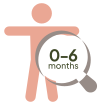
Tests done at diagnosis and about every 6 months:
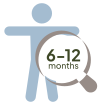
Tests done at diagnosis and about every 6 to 12 months:
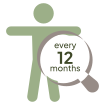
Tests done at diagnosis and every 12 months:
The healthcare team will determine which tests are right for each person with NPC and/or may order tests not shown on this list.
Tell your healthcare provider about all the medications you take and if you get any new medications, including prescription and over-the-counter medicines, vitamins, and herbal supplements. Other medicines may cause side effects or affect how AQNEURSA works when used together.
The most common side effects of AQNEURSA in people treated for Niemann-Pick disease type C include abdominal pain, dysphagia, upper respiratory tract infections and vomiting.
The most common side effects of AQNEURSA in people treated for ataxia-telangiectasia include fall, skin laceration, and urinary tract infection.
These are not all the possible side effects of AQNEURSA. Call your doctor for medical advice about side effects. You are encouraged to report side effects of prescription drugs to the FDA. Visit www.fda.gov/medwatch, or call 1-800-FDA-1088 .
AQNEURSA® (levacetylleucine) is indicated for the treatment of neurological manifestations of Niemann-Pick disease type C (NPC) in adults and children weighing ≥15 kg.
AQNEURSA® (levacetylleucine) is indicated for the treatment of ataxia in adults and children with ataxia-telangiectasia (A-T) weighing ≥15 kg.
Tell your healthcare provider about all the medications you take and if you get any new medications, including prescription and over-the-counter medicines, vitamins, and herbal supplements. Other medicines may cause side effects or affect how AQNEURSA works when used together.
The most common side effects of AQNEURSA in people treated for Niemann-Pick disease type C include abdominal pain, dysphagia, upper respiratory tract infections and vomiting.
The most common side effects of AQNEURSA in people treated for ataxia-telangiectasia include fall, skin laceration, and urinary tract infection.
These are not all the possible side effects of AQNEURSA. Call your doctor for medical advice about side effects. You are encouraged to report side effects of prescription drugs to the FDA. Visit www.fda.gov/medwatch, or call 1-800-FDA-1088 .
AQNEURSA® (levacetylleucine) is indicated for the treatment of neurological manifestations of Niemann-Pick disease type C (NPC) in adults and children weighing ≥15 kg.
AQNEURSA® (levacetylleucine) is indicated for the treatment of ataxia in adults and children with ataxia-telangiectasia (A-T) weighing ≥15 kg.